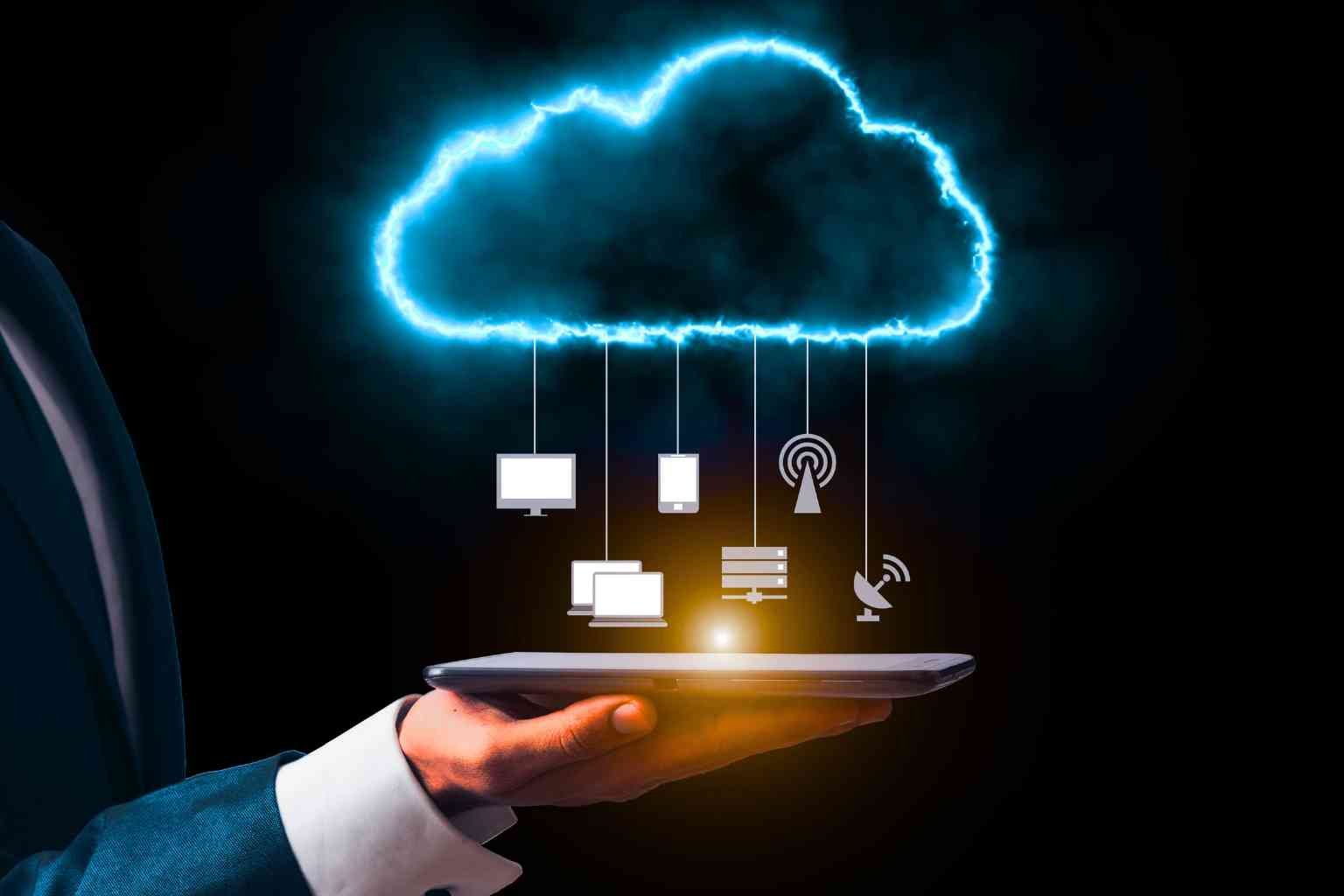
Cloud computing has rapidly changed over the last ten years. From simple storage to AI driven services, the cloud is supporting almost every digital service we consume. A new era, sometimes referred to as Cloud 3.0 is arising, as companies seek greater flexibility, security and performance from their cloud providers. This next wave will be about hybrid computing, intelligent automation and frictionless integration across of public, private and edge environments. The future of cloud isn’t just storage, it’s smarter and more intelligent digital infrastructure.
1. What Is Cloud 3.0
Cloud 3.0 is a new era of cloud computing. The early releases were oriented toward virtualization and scalability. Cloud 3.0 is about intelligence, automation, data driven decision making, and integrating across a variety of environments. It uses AI, machine learning and edge computing to create quicker response systems.
2. Understanding Hybrid Computing
Hybrid computing combines the best of public, private clouds and on premise model. Rather than relying on a single system, businesses leverage multiple platforms depending on their workload requirements. Sensitive data can live in private but scalable applications, run on public clouds.
3. Why hybrid models are all the rage
Hybrid computing is favored by organizations as it provides flexibility and control. With data, companies have an option for where to store or process the data. This has a risk-mitigating effect and also increases efficiency while being in line with regulatory requirements.
4. Key Benefits of Cloud 3.0
Some of the benefits that Cloud 3.0 brings to business and developers are:
- Intelligent automation of IT operations
- Improved data security and privacy settings
- Faster performance through edge integration
- Cost optimization using flexible infrastructure
- Seamless scalability for growing applications
These characteristics render the cloud systems more adaptable and efficient.
5. Artificial Intelligence and Cloud 3.0
AI is the heart of Cloud 3.0 It’s no mystery that AI powers all these applications of cloud technology. Smart systems watch workloads, predict traffic surges and then automatically adjust resources. This minimizes downtime and enhances performance with little or no manual intervention. Analytics powered by AI also assist businesses in achieving strategic decisions at a much faster pace.
6. Multi Cloud and Edge Integration
There won’t be any one cloud to rule all clouds in the future. A multi cloud strategy allows businesses to access offerings from multiple delivery models and vendors, increasing flexibility in workload deployment choices.
- Unify on one cloud for data analytics
- Use another for AI processing
- Keep sensitive information in the private cloud
- Bring applications closer to end-users using edge servers
- Balance workloads across platforms
This decentralized method enhances robustness and efficiency.
7. Security and Compliance in Hybrid Mode
The more we distribute systems, the more security matters. 3. Cloud 3.0 is all about zero trust, encryption, and automating threat detection. The model also gives enterprises the ability to maintain control of sensitive data (such as corporate financials and customer information, which they feel a little less comfortable moving to the cloud) and tap into superior compute power when needed.
8. Impact on Businesses and Startups
Cloud 3.0 and hybrid computing reduce the cost of experimentation. It’s also a great way for startups to scale without the initial infrastructure costs. We have been providing incremental modernization to the biggest companies in the world without a rip and replace. This balance fosters growth and trial with error.
9. Challenges in Adopting Cloud 3.0
Nevertheless, Cloud 3.0 also brings its share of challenges:
- Complex infrastructure management
- Need for skilled cloud professionals
- Integration issues between systems
- Higher initial setup planning
- Data governance complexities
Key tactics and intelligence are needed for a successful transition.
10. The Prospects of Cloud 3.0
Cloud 3.0 will define the future of digital transformation! Companies will increasingly depend on intelligent systems that self-regulate workloads, minimize processing latency, and secure devices. Hybrid computing will be the new normal, giving flexibility and strength in an always-on world.
Key Takeaways
The smarter and more agile era of cloud computing driven by AI, automation and hybrid models. Hybrid computing enables flexibility, security and performance by integrating public, private and edge systems. Under the pressure of digital demands, Cloud 3.0 will be core to new innovation and business expansion.
FAQs:
Q1. How do you define Cloud 3.0 for someone who doesn’t necessarily know what it is?
It is the generation of intelligence, automatisation and hybrid.
Q2. What is hybrid computing?
Mixed computing refers to the combination of public cloud, private cloud and on premises systems.
Q3. Why are companies choosing hybrid cloud?
Because they provide greater flexibility, more control and can be more secure.
Q4. Is Cloud 3.0 powered by artificial intelligence?
Yes, it absolutely is; AI is a critical aspect for Cloud 3.0 in terms of automation and optimization.
Q5. Hybrid Computing: Is this the future of cloud?
Yes, a number of experts think hybrid models are where things will end up.